What Well-Lit Streets Should Feel Like
Safe and vibrant streets require welcoming lights, not overwhelming brightness. An expert team of lighting designers and urban planners assessed lighting conditions in three New York City neighborhoods — selected by cross-referencing six years of gun violence data with a network of community-based partners — and identified scalable solutions that can be deployed quickly and effectively.
Better light, not brighter light
While research shows that brighter lights can reduce crime, harsh lighting can have a negative impact on how welcoming a space looks and feels. The quality of the light impacts whether people want to be on the street socializing and shopping, or feel unwelcome and prefer to stay away.
Nighttime illumination: key concepts
Understanding four core lighting properties is essential to designing safer streets.
Illuminance
Illuminance measures how much light falls on a surface or location and is expressed in foot-candles (a measure of the light cast by a single candle upon a surface one foot away). It is the primary metric for evaluating the amount of light in a given space.
Illuminance is affected by the frequency of light fixtures and their output level. Too much creates glare and health risks; too little leaves people unable to see clearly.
Contrast and uniformity
Contrast is the difference in illuminance between two adjacent locations, expressed as a ratio. High contrast means bright spots next to dark ones.
When contrast is high, the human eye struggles to adapt. When light is uniform, the ratio between a brighter location and an adjacent darker location is 4:1 or less. Uniform light dramatically improves visibility and comfort, which research associates with greater perceived safety.
Glare
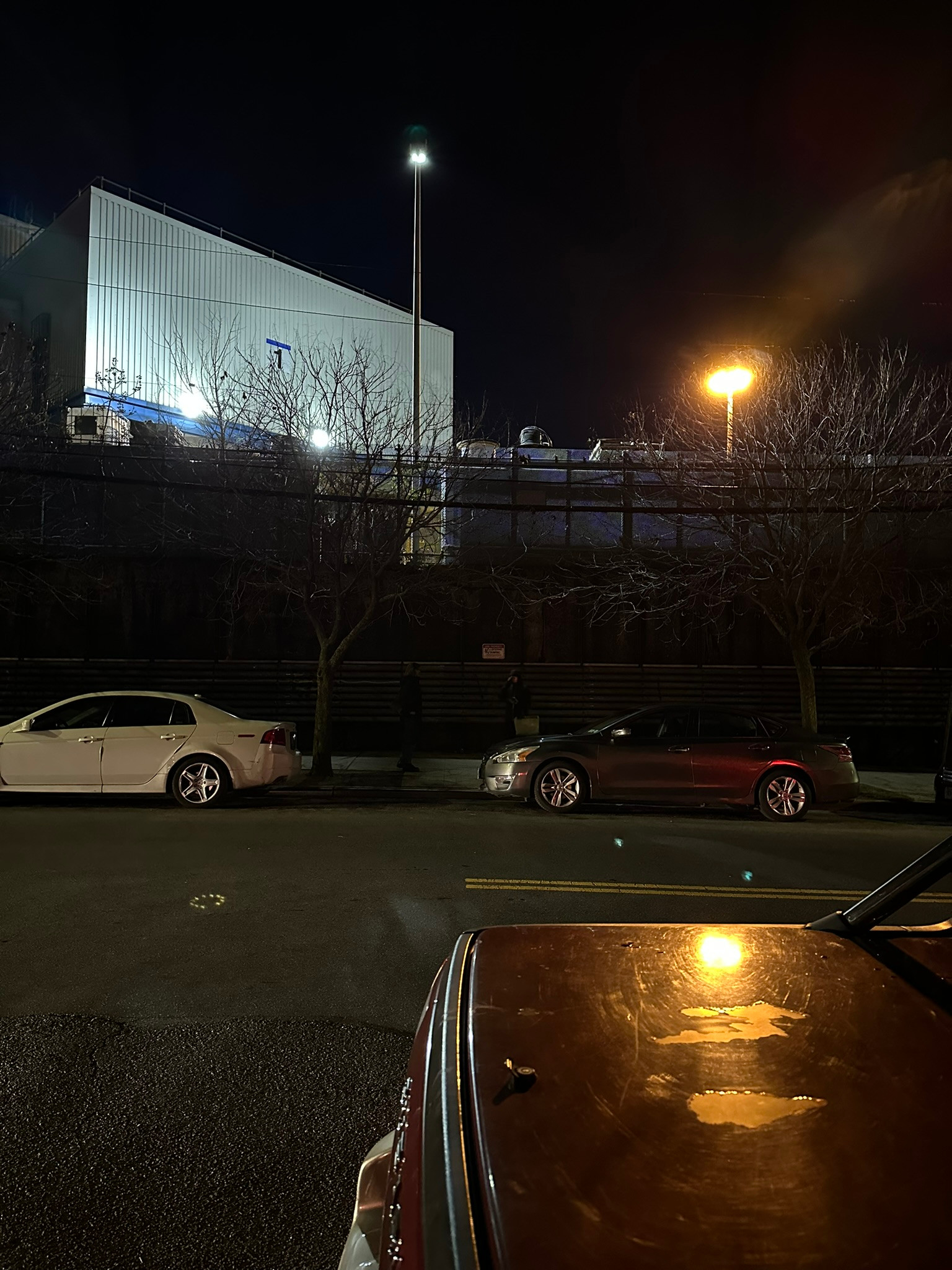
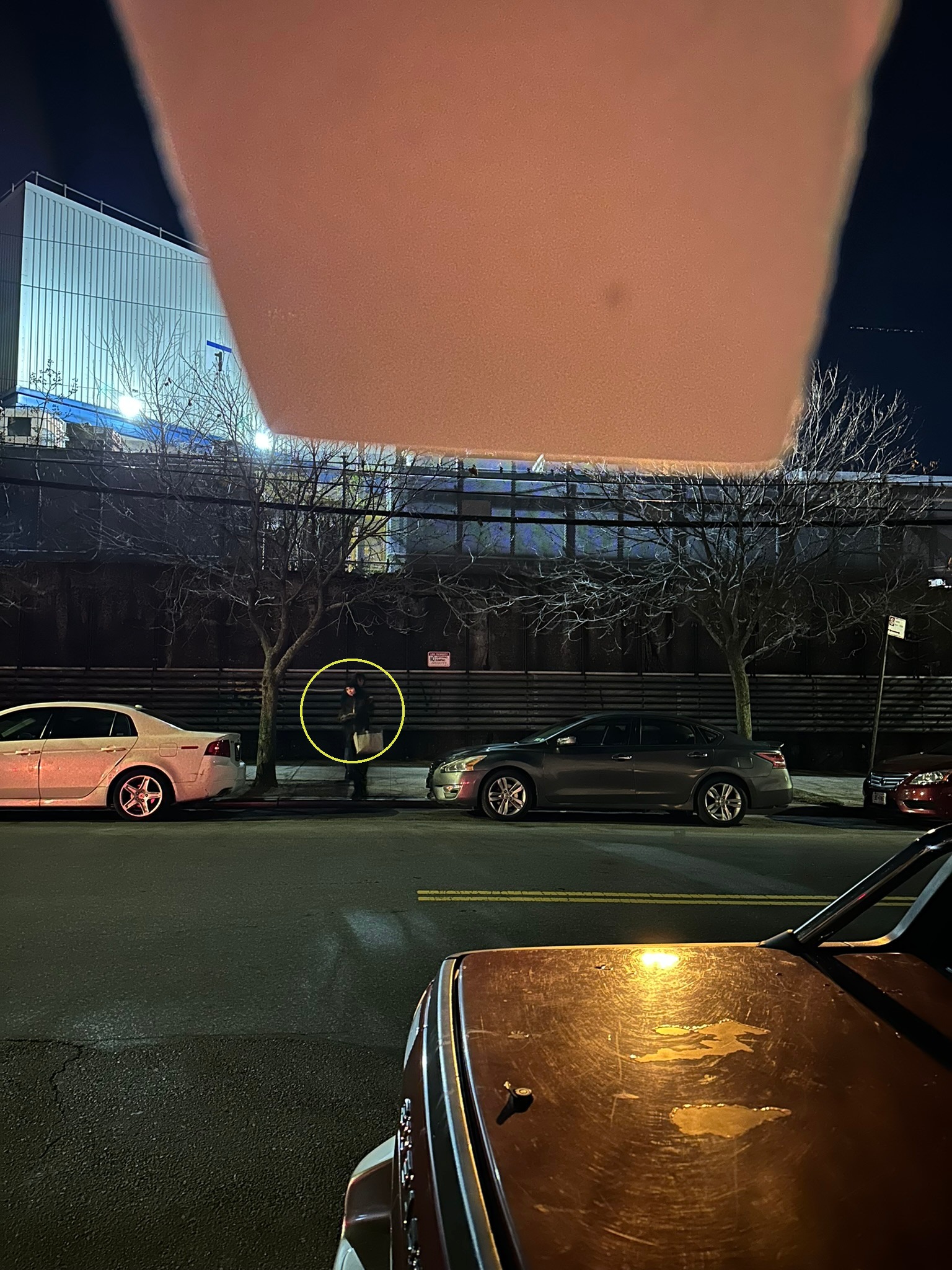
Glare is the sensation caused by an excessively bright light source in the field of vision — similar to oncoming headlights that make it harder to see the road ahead.
Overly bright streetlights cause discomfort and decrease visibility. When lights produce glare, contrast increases, making dark areas seem even darker and reducing pedestrians’ ability to see and feel safe.
Color temperature
Color temperature describes how warm or cool a light source appears, measured in Kelvins. Candlelight is warm and amber; daylight is cool and blue.
Warmer sources (3,000 K or below) create a more comfortable exterior environment. They encourage people to use public spaces and thus improve both perceived and actual safety.
Spacing matters more than power
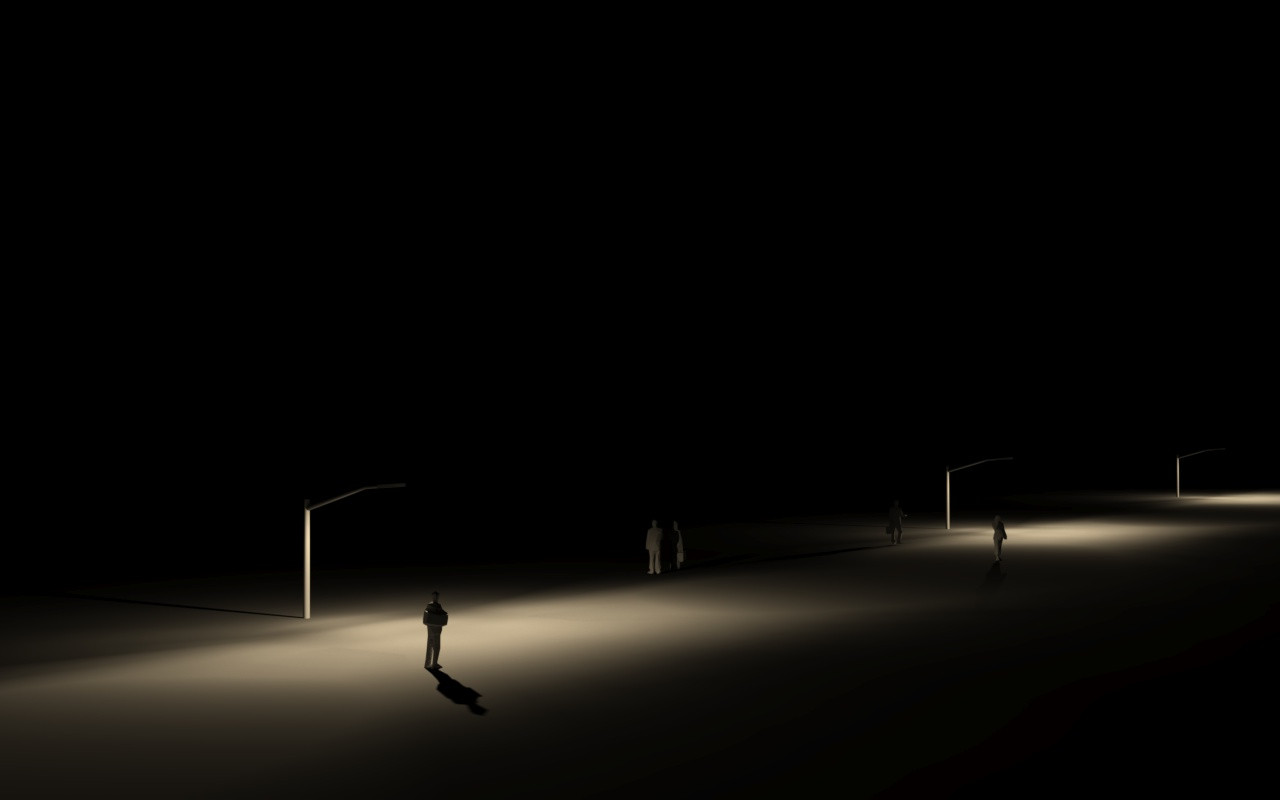
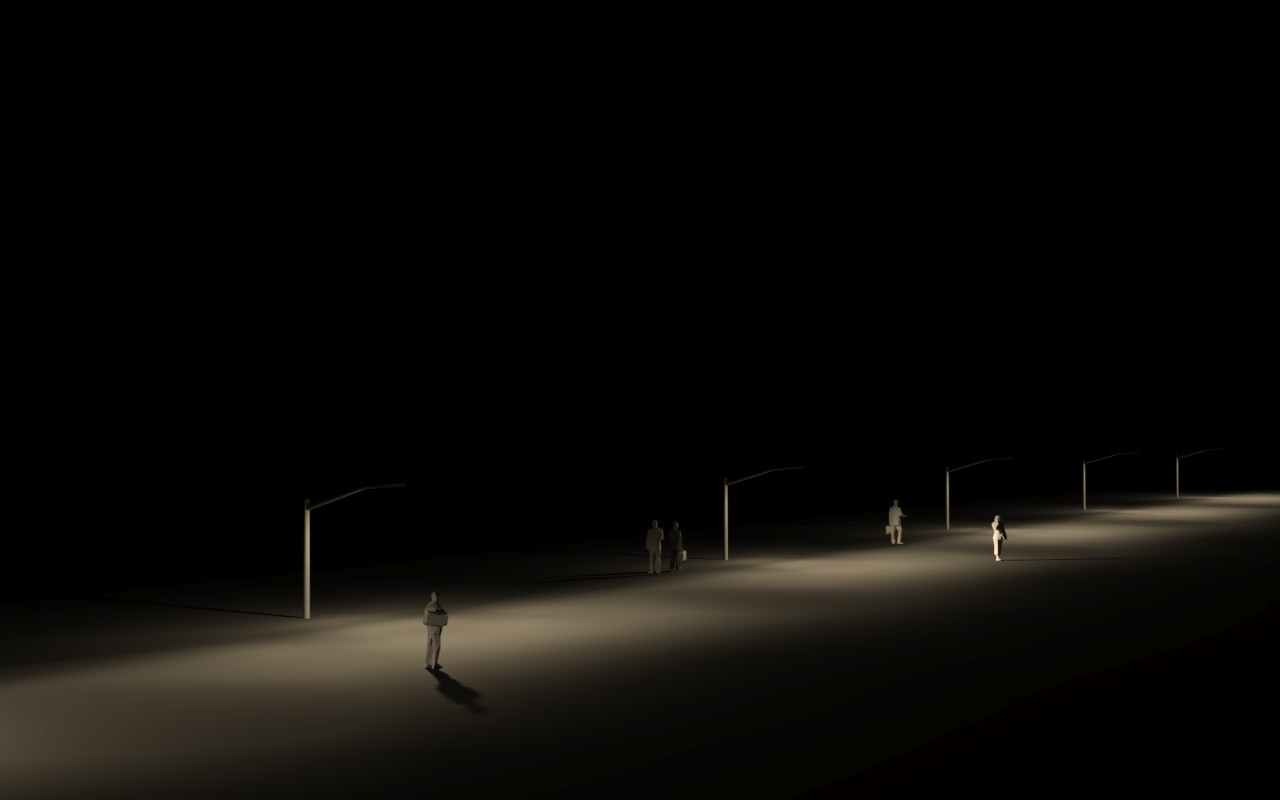
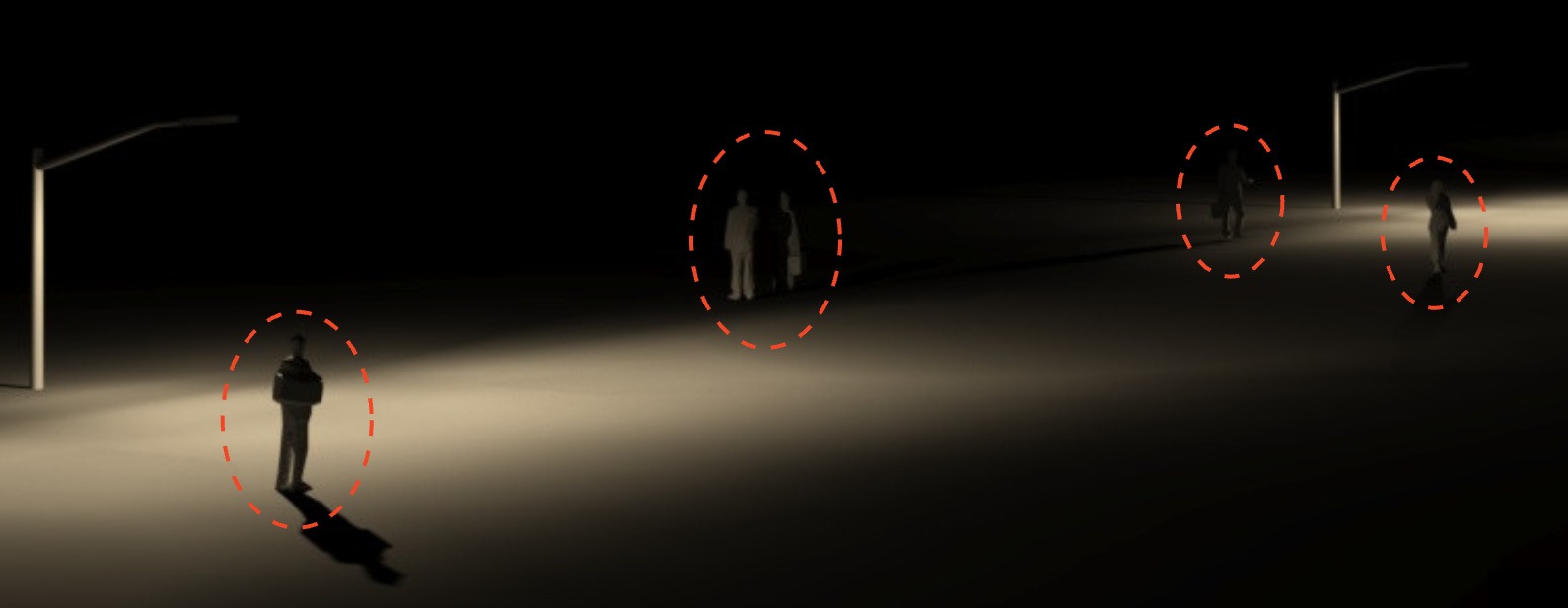
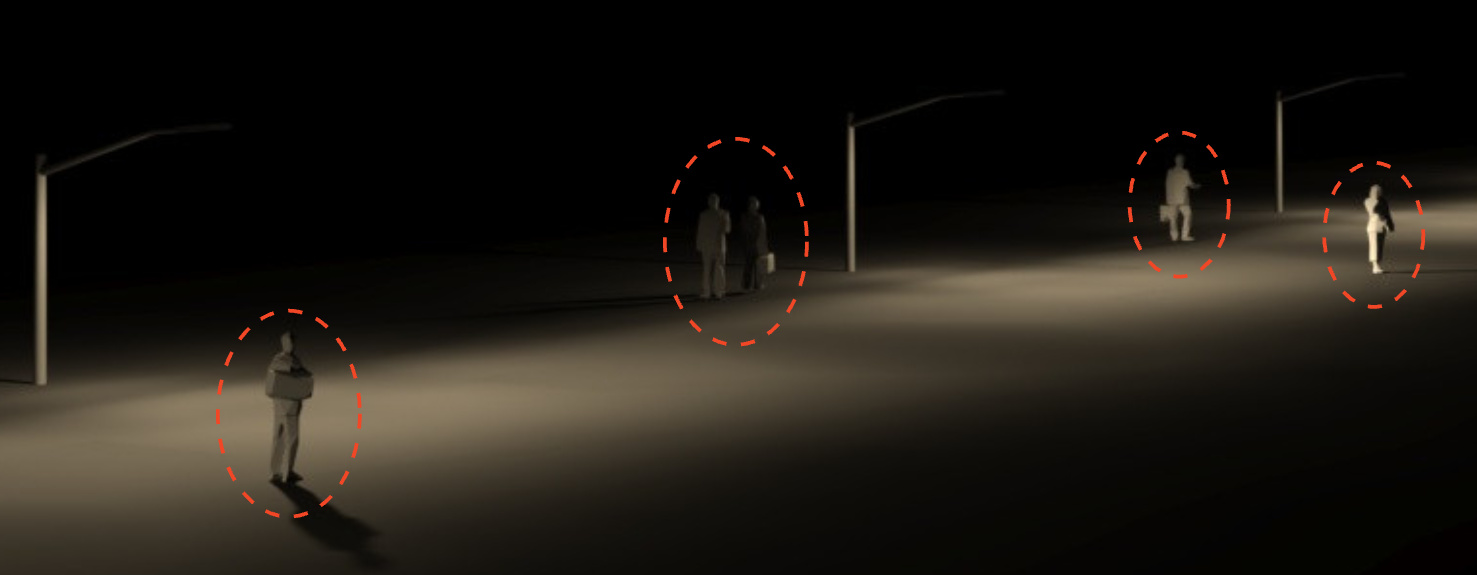
The human eye sees best when light is uniformly distributed. Several lower-output fixtures improve visibility more than one high-powered fixture. The two examples below have the same average illuminance — but vastly different results.
100% output, fewer fixtures
50% output, double the fixtures
What came before and why it needs to change
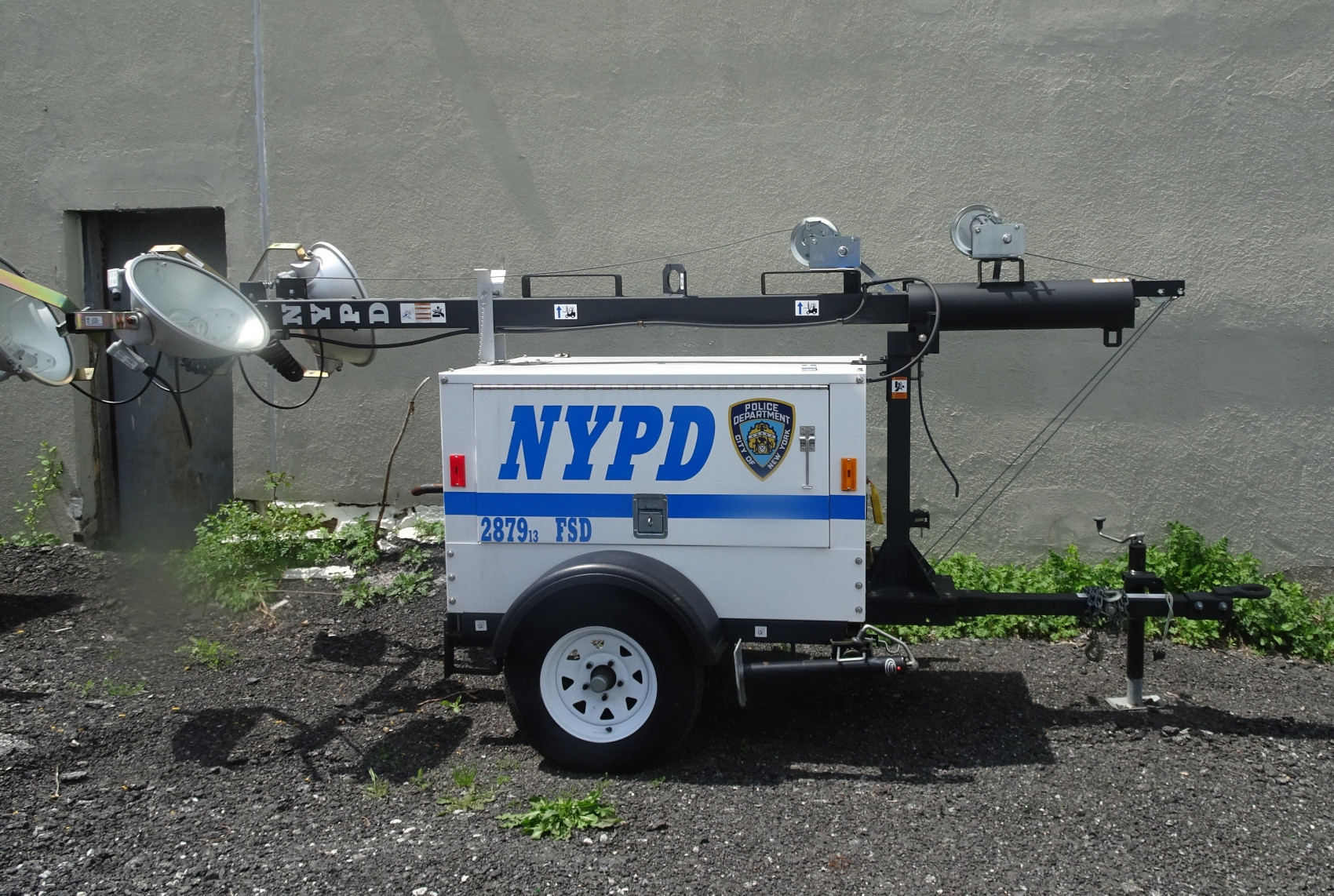
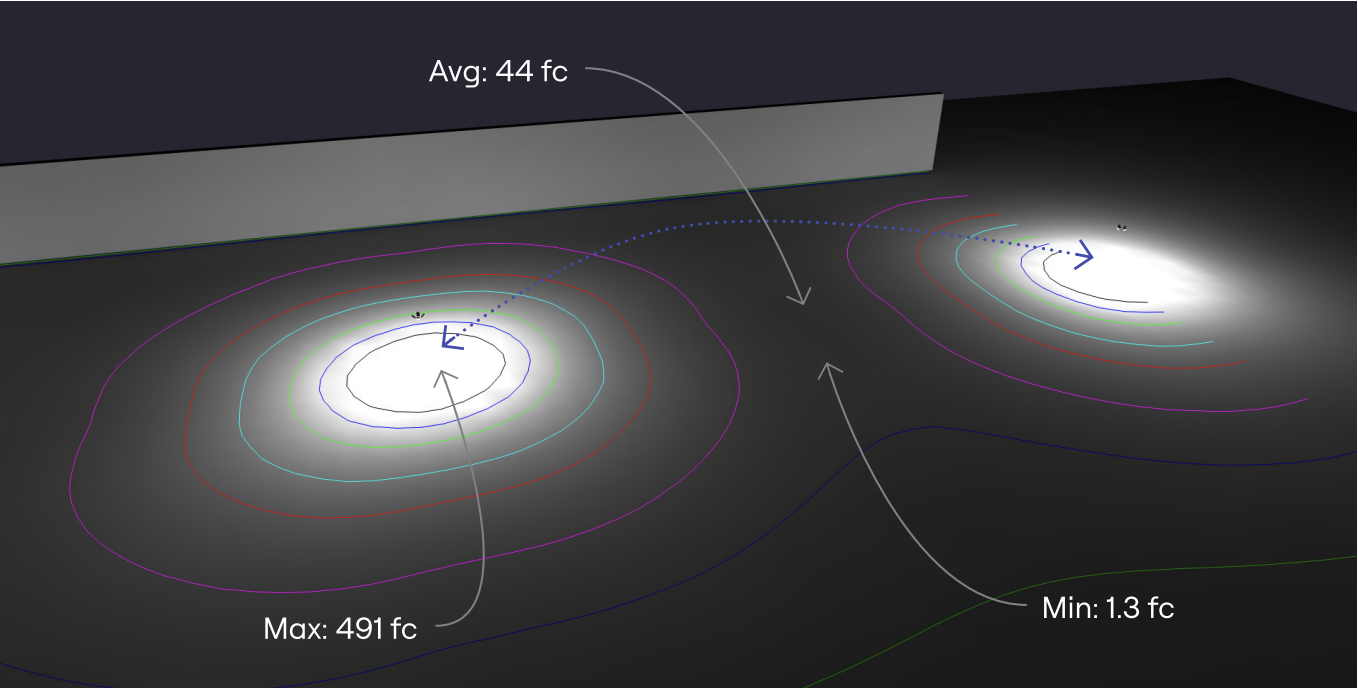
In a landmark 2016 randomized controlled trial at New York City Housing Authority (NYCHA) developments, the city tested the deployment of diesel-powered mobile towers — each fitted with four high-powered floodlights on a telescoping pole. The study found that these lights reduced crime — but at significant cost to light quality, health and livability.
Strengths
- Instant, targeted response to safety concerns
- Flexible; no permanent infrastructure required
Shortcomings
- Illuminance 250 times higher than recommended outdoor levels
- Blinding glare that decreases nighttime visibility
- Contrast ratio 8 times higher than recommended (34:1 vs. 4:1)
- Unshielded light spills into apartments
- Diesel engines produce noise and reduce air quality
- Overly bright light disrupts circadian rhythms, which is linked with impaired daytime functioning, obesity and increased risk of breast cancer
- Significant labor and operational costs to maintain
What the streets told us
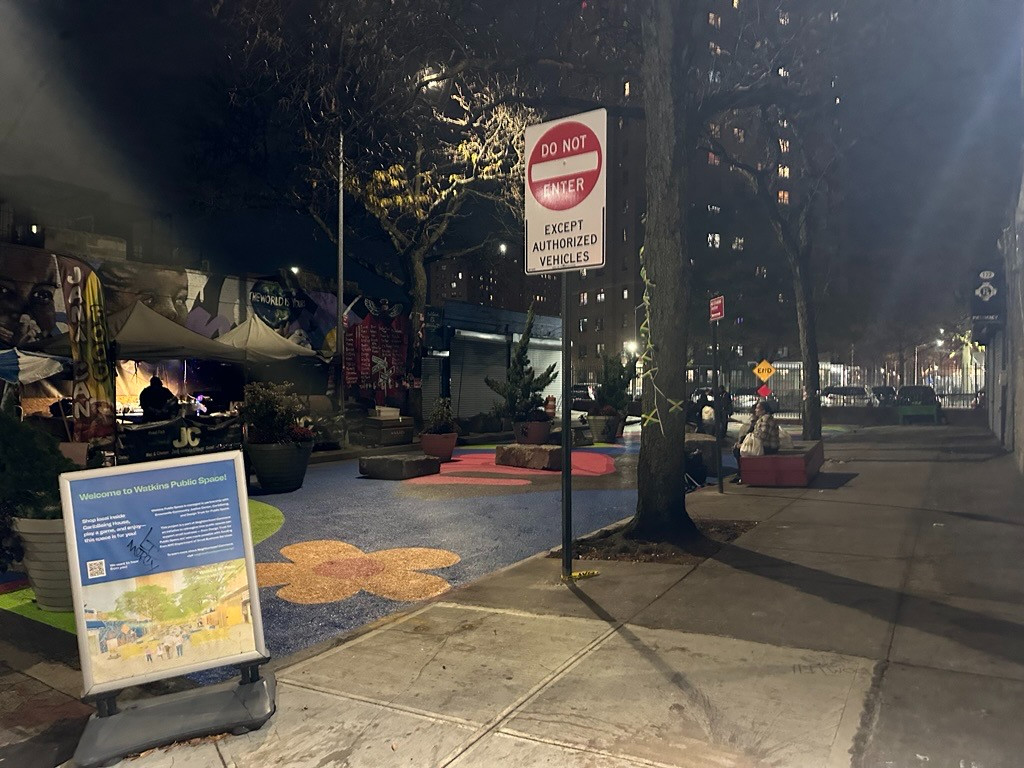
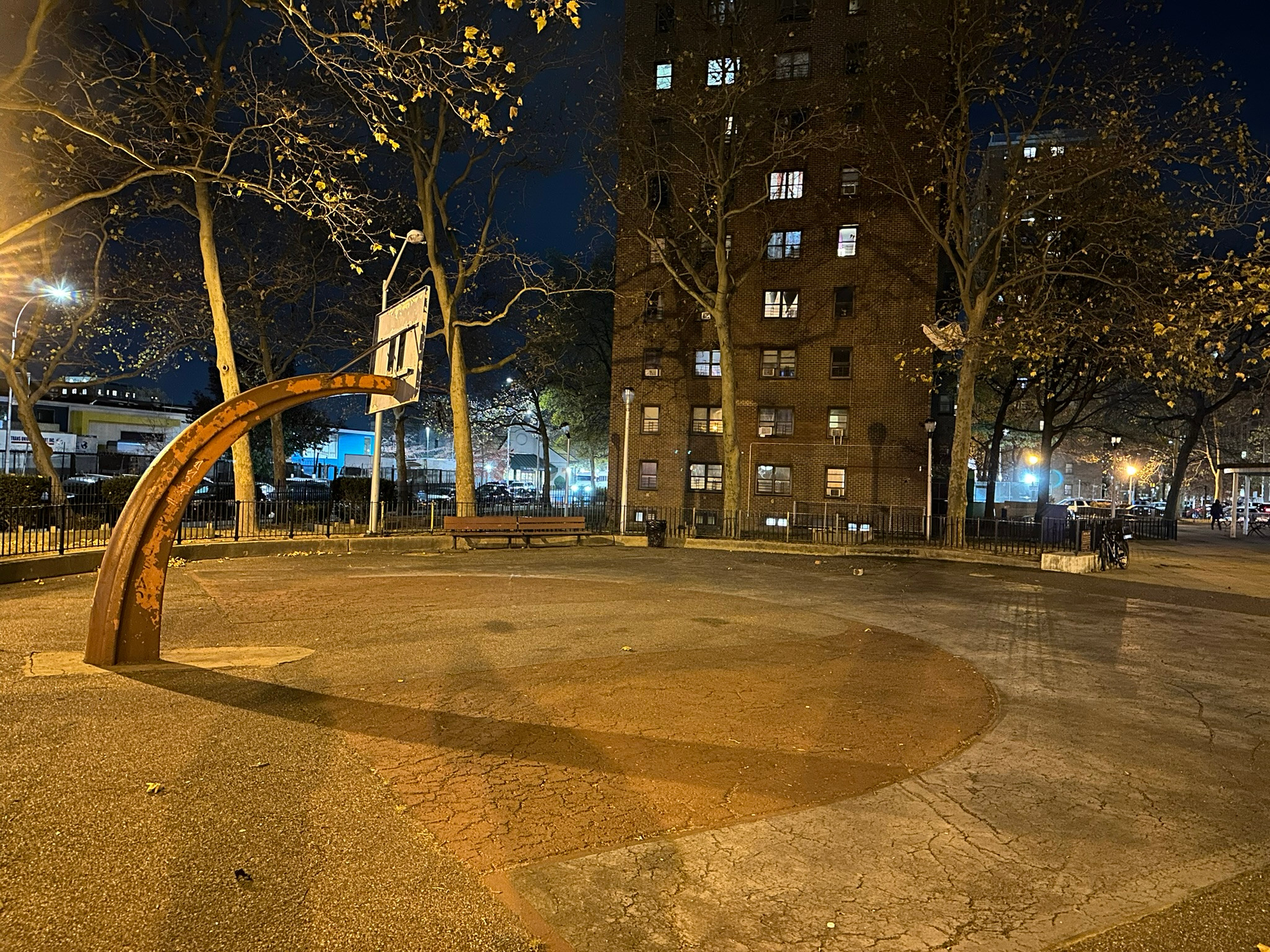
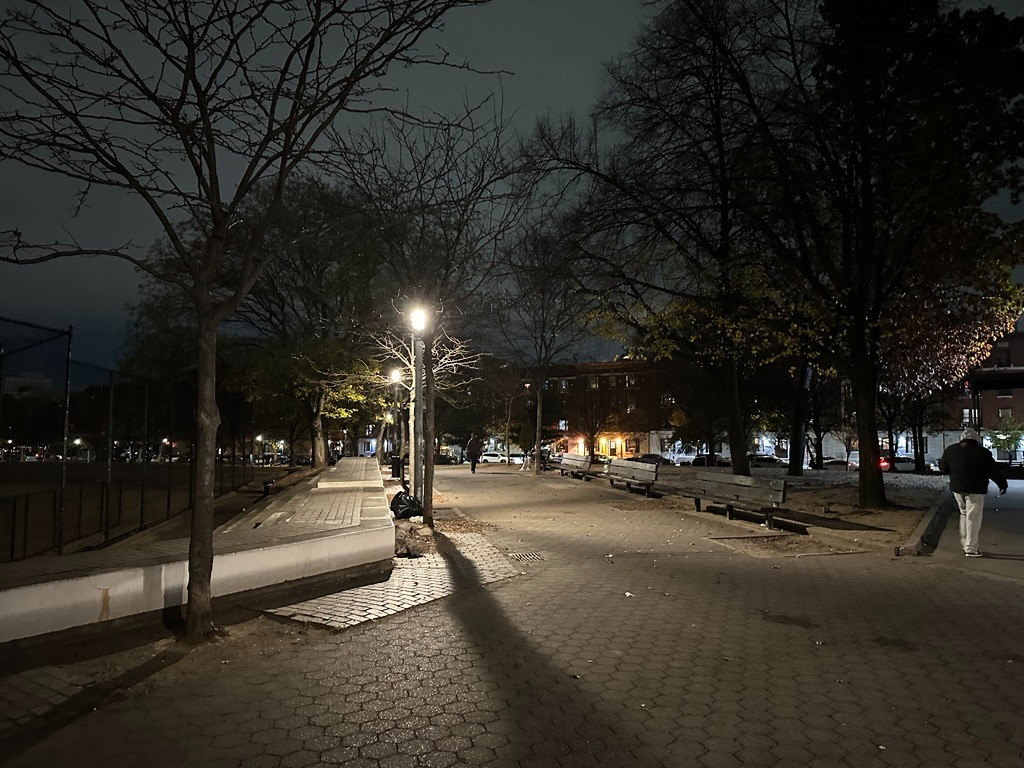
The design team partnered with local organizations to conduct after-dark walkthroughs covering commercial corridors, residential streets, parks and plazas in three neighborhoods — Brownsville, Brooklyn; Longwood, the Bronx; and Richmond Hill, Queens.
What's working
Structure-mounted lighting
Lighting attached to structures and directed downward minimizes glare and contrast. It provides uniform illumination that promotes visibility and feelings of safety.
Lit storefronts
Businesses that added exterior lighting with semitransparent roll-down grates improved brightness and perceptions of safety even when stores were closed. When stores close and opaque grates come down, sidewalk illumination drops notably — highlighting the value of transparent alternatives.
Vendors on public plazas
Food vendors with focused illumination make plazas feel bright and active at night, creating comfortable gathering spaces and increasing “eyes on the street.”
Informal innovation
Residents brought battery-powered lighting to an unlit sports court for a game of cricket — a demonstration of the benefits of focused, activity-driven illumination that is only on when the activity is ongoing.
What can be improved
Poorly lit outdoor spaces
Poor lighting around covered structures, seating and courts creates shadow pockets that lower perceived safety and reduce use at night. The same is true of most scaffolding. Additional illumination would both reduce shadows and promote activity in the evening.
Overly bright building entries
Most entries rely on glare-heavy “wall pack” fixtures that blind pedestrians, making it harder to see text, doorways and other people. Shielded, downward-directed fixtures would help.
Light trespass
Light spilling beyond property lines reduces uniformity and increases contrast. In Richmond Hill, a tall Metropolitan Transportation Authority (MTA) mast for the Long Island Rail Road (LIRR) train yard illuminates an adjacent residential building, preventing occupants from achieving the darkness needed for healthy sleep. This could be corrected with proper shielding.
Overly bright sidewalks
Many locations have far more illumination than needed, worsened by the transition from legacy incandescent and metal halide fixtures to LEDs. Excessive light causes visual discomfort and deep shadows between buildings.
Nighttime walkthroughs coordinated by Pitkin Ave BID, Youth Ministries for Peace and Justice, and Chhaya CDC.
A family of improved lighting interventions
The proposed interventions are flexible, low-cost and apply best practices in lighting design. They can attach to existing infrastructure or stand independently. Different scales adapt to different urban conditions.
Wall-mounted
Mitigates glare while providing ample light at building entries and on adjacent sidewalks. Replaces existing wall-mounted fixtures on residential and commercial buildings.
Existing InfrastructurePedestrian arm on street pole
Attaches to existing octagonal street poles. Focuses light at human scale to provide supplemental illumination at corners, bus stops and areas of interest. Mounted no higher than the second-floor windowsill to prevent light spilling into residential units.
Existing InfrastructureMobile unit
A direct replacement for the 2016 trial units. Towed or flatbed-delivered, configurable with area or accent lights. Designed for near-immediate deployment in response to crime or events.
New InfrastructurePermanent installation
The same mobile fixture adapted for permanent use. Installed on a concrete base and fed with appropriate electricity. No functional difference; just lasting infrastructure.
New InfrastructureLower-scale typology
For contexts where a standard 25-foot pole is too tall. Same fixtures at reduced height, proportionate to surrounding context. Used when only small areas need illumination.
New Infrastructure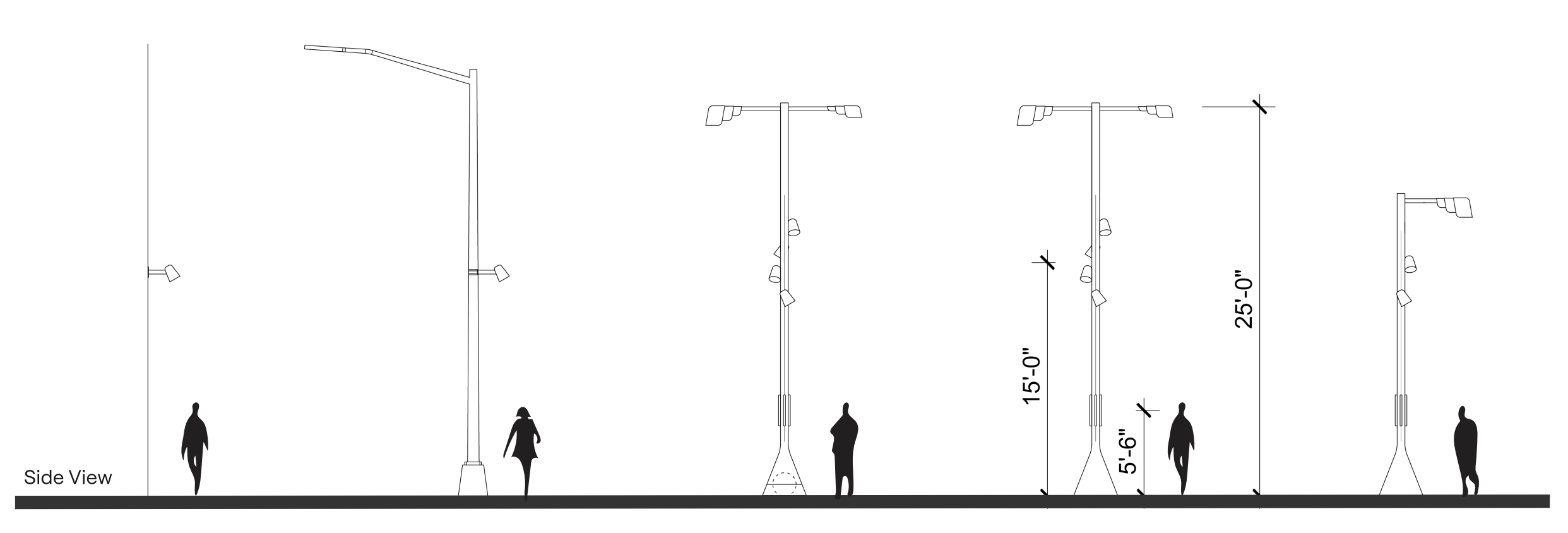
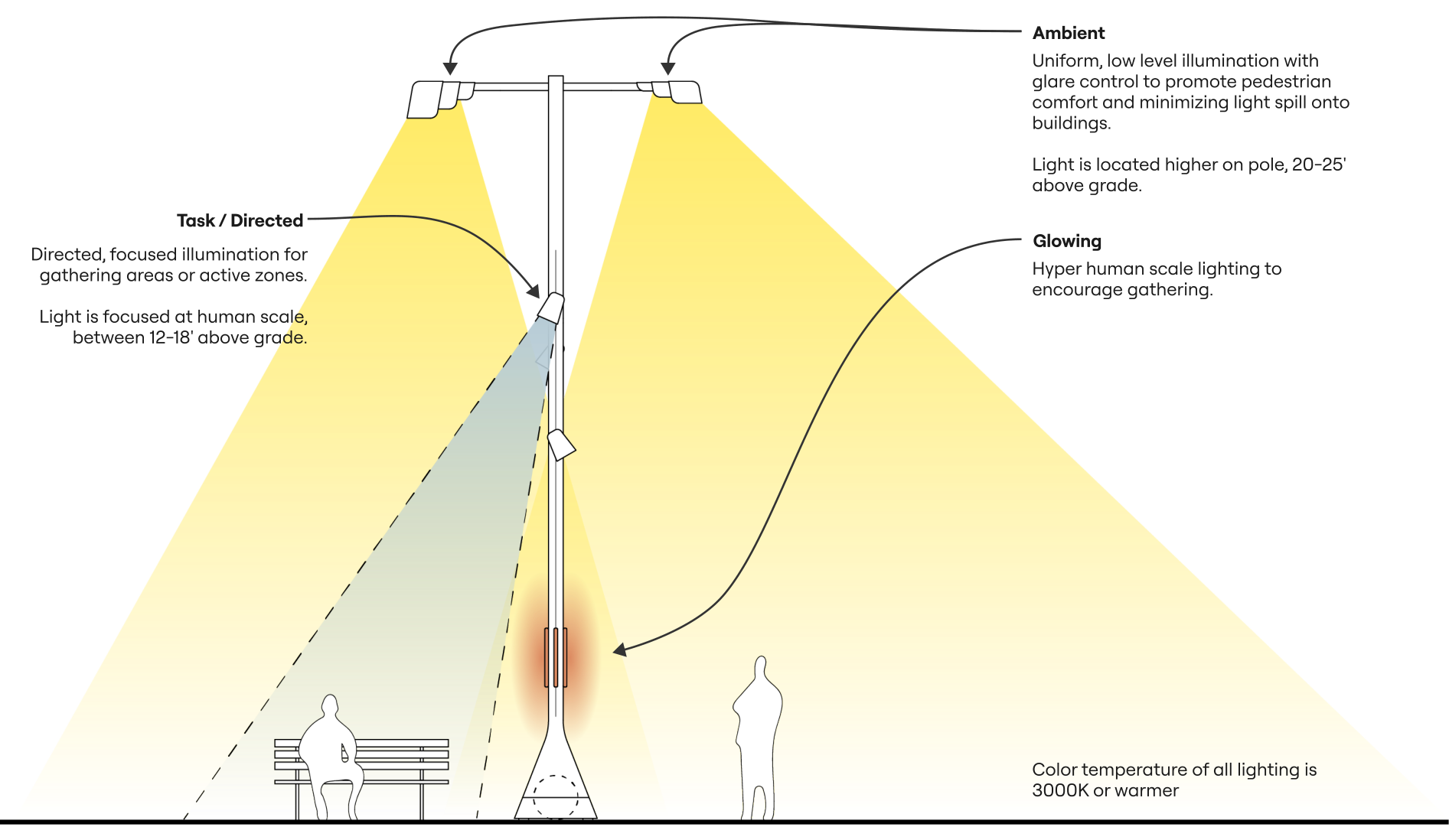
Three layers of light
Mobile units can combine three types of lighting, each intended for a different urban condition. All use a color temperature of 3,000 K or warmer.
Ambient
Uniform, low-level illumination with glare control. Promotes pedestrian comfort and minimizes light spill onto buildings.
Task/directed
Focused illumination for gathering areas or active zones. Light is directed at human scale.
Glowing
Hyper-human-scale lighting to encourage gathering. Creates warm, inviting pools of light at ground level.
Glare shield options
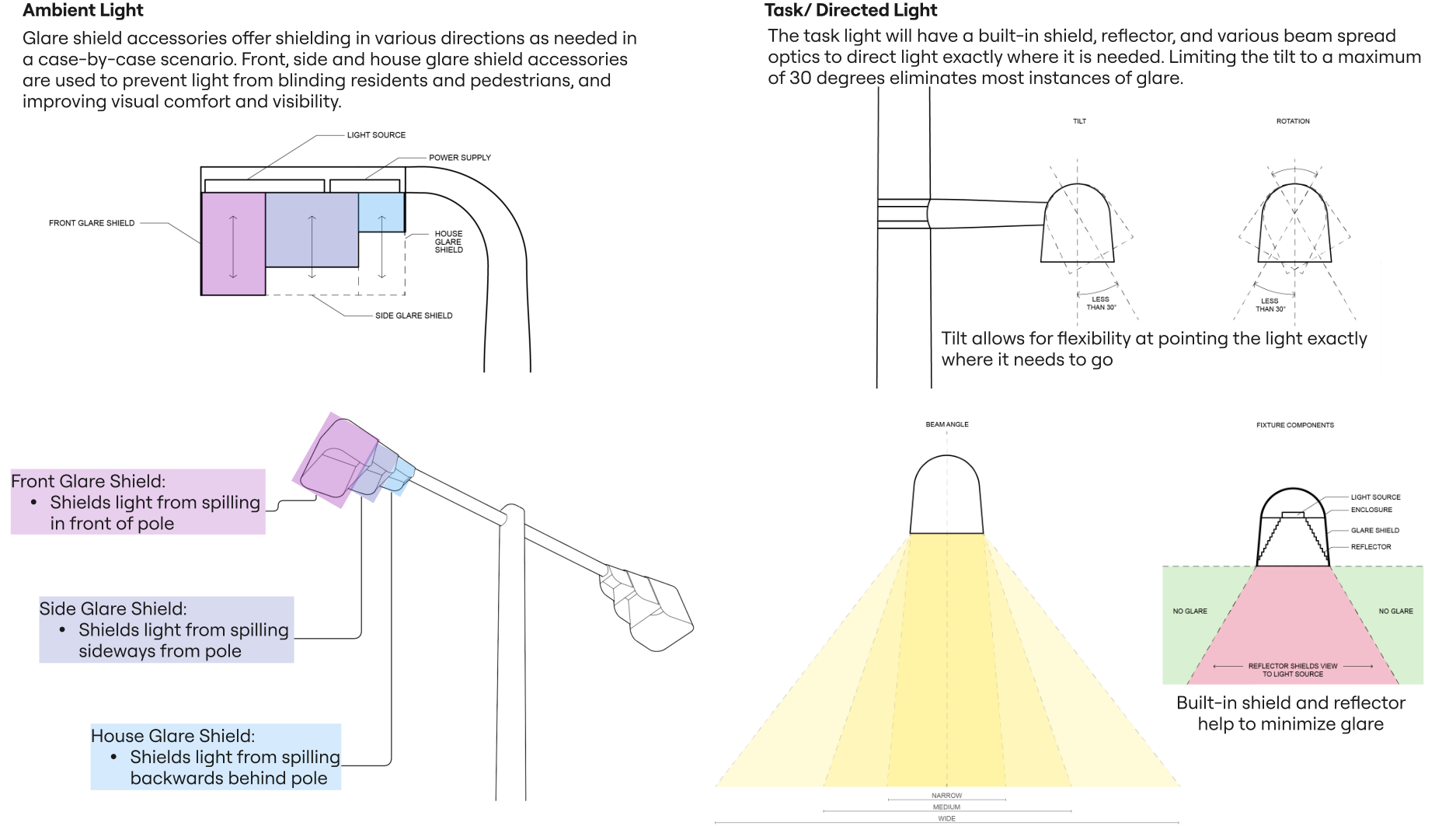
Glare shield accessories prevent light from blinding residents and pedestrians, improving both visual comfort and visibility. The task light's built-in shield and reflector, limited to a maximum 30-degree tilt, eliminates most glare while allowing flexibility to direct light exactly where it is needed.
Front shield
Limits glare in the head-on direction. Creates a comfortable environment or keeps light focused around the post.
Side shield
Limits light spill on either side. Prevents light trespass on buildings or adjacent properties.
House-side shield
Limits light spill behind the source. Prevents light trespass on buildings directly behind the pole.
Nonlighted accessories
The family of improved lights can incorporate a variety of accessories that add resources for residents and passersby. (Devices shown are manufactured by Lumca and are included as reference images, not necessarily for specification.)
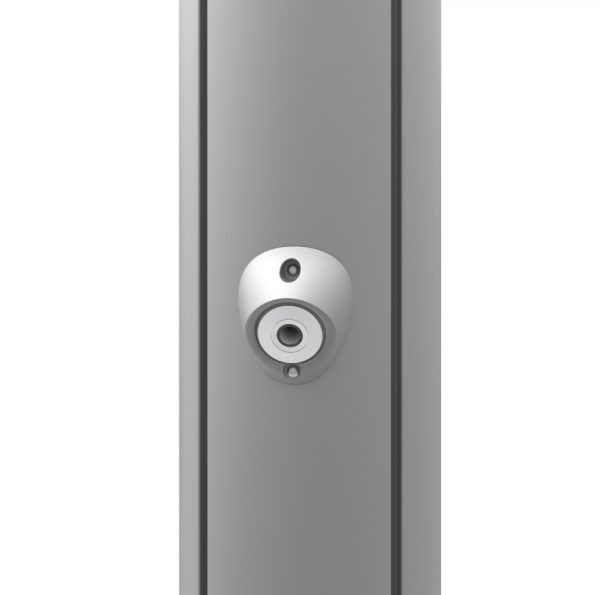
Occupancy sensor
Detects pedestrian movement to raise light levels when the area is occupied. Dims during unoccupied times to save energy.
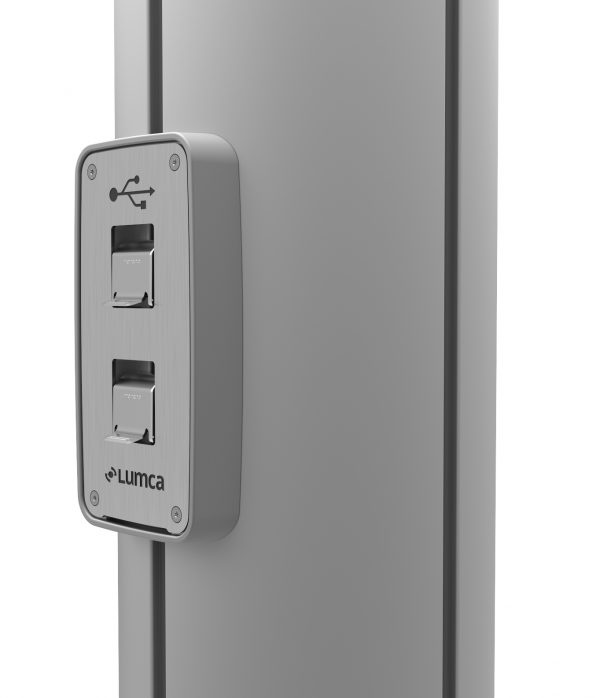
Device charging
Offers USB connections for device charging for pedestrians or plaza occupants.
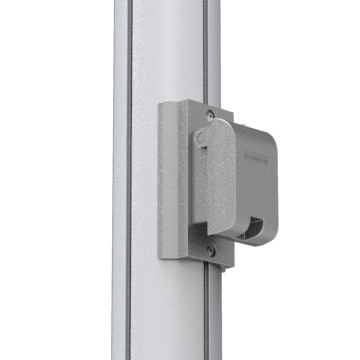
Lockable receptacle
Provides local vendors an opportunity to activate exterior space through standard, lockable power receptacle.
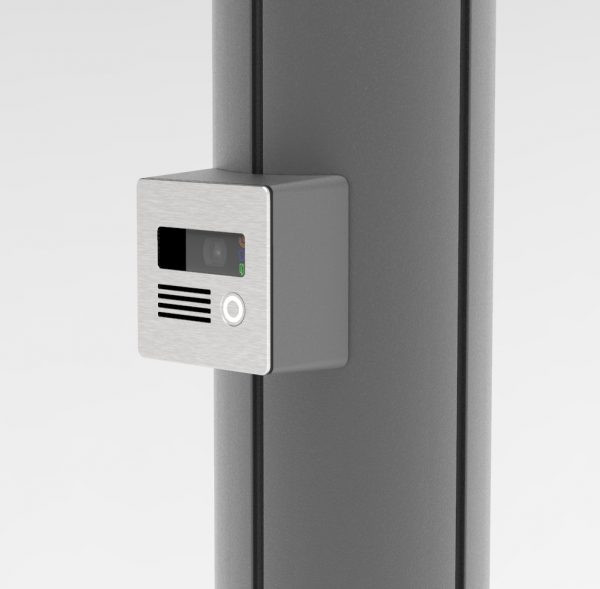
Emergency call button
Allows pedestrians to communicate directly with police, fire or EMS services.
Infinitely configurable
The proposed lights and accessories are infinitely configurable. Temporary installations use field-adjustable glare shields; site-specific considerations should inform the exact settings and accessories. Parts from temporary poles can be reused in permanent solutions.
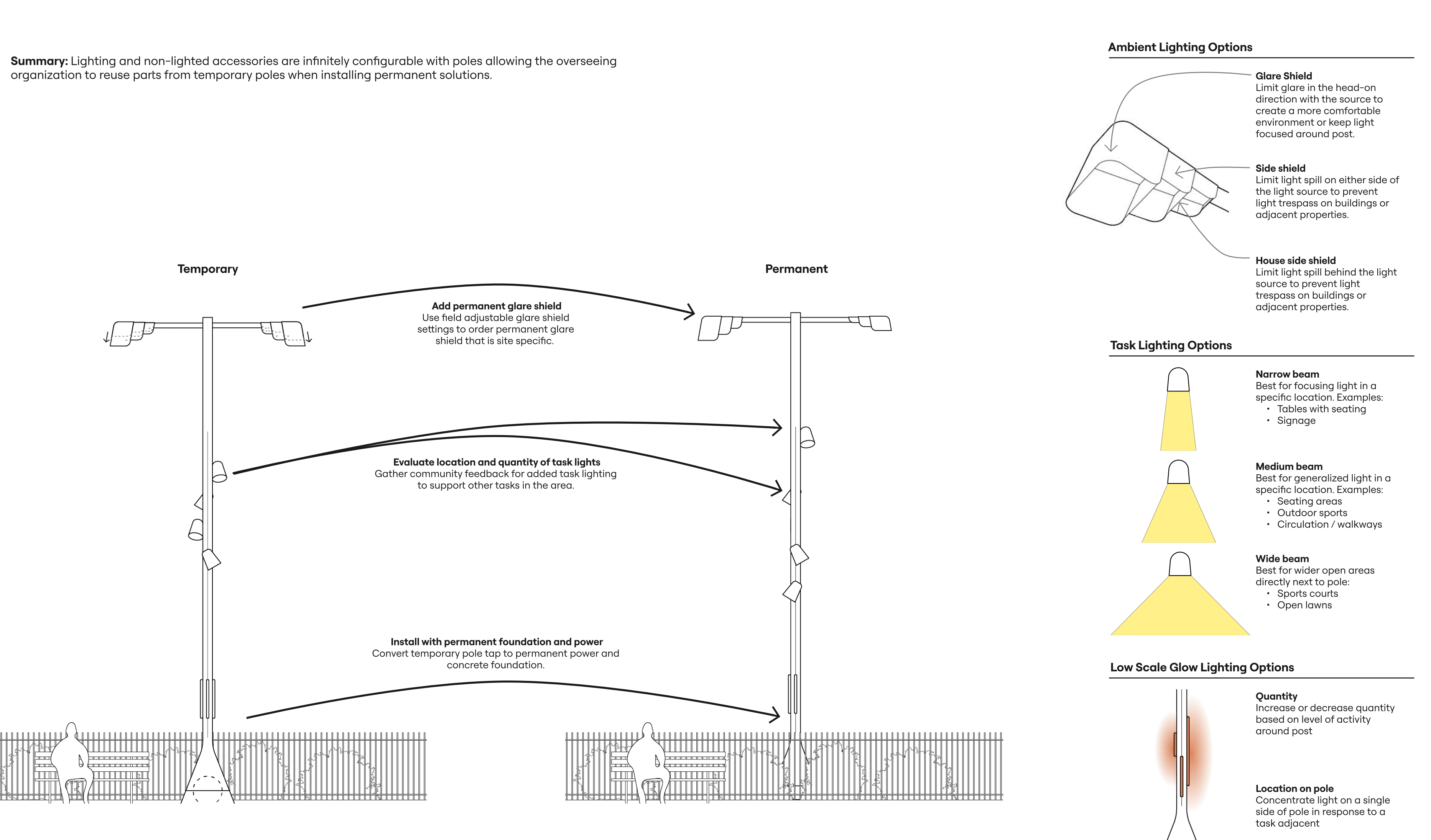
From identification to permanence
A community engagement and installation process ensures interventions meet neighborhood needs and are sited where they will be most effective.
The toolkit in action
Two sites identified during neighborhood walkthroughs show how the proposed lighting family could transform public space.
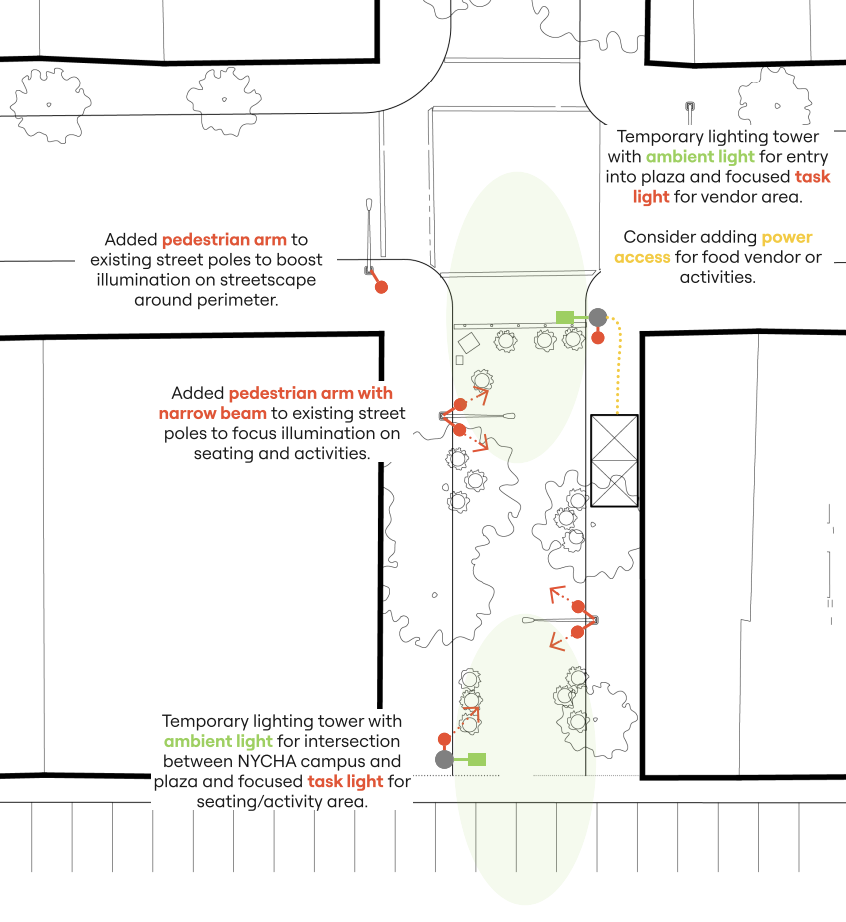
Belmont Avenue Plaza, Brownsville, Brooklyn
This public plaza, once a dead-end street, has existing street lighting that provides base illumination. The proposal adds mobile units and task lighting in select locations to improve visibility, uniformity and user comfort. Pedestrian arms on existing street poles boost illumination around the perimeter. A temporary lighting tower with ambient light covers the intersection between the adjacent NYCHA campus and the plaza, while focused task lights serve seating and vendor areas. Power access for food vendors is recommended to further activate the space.
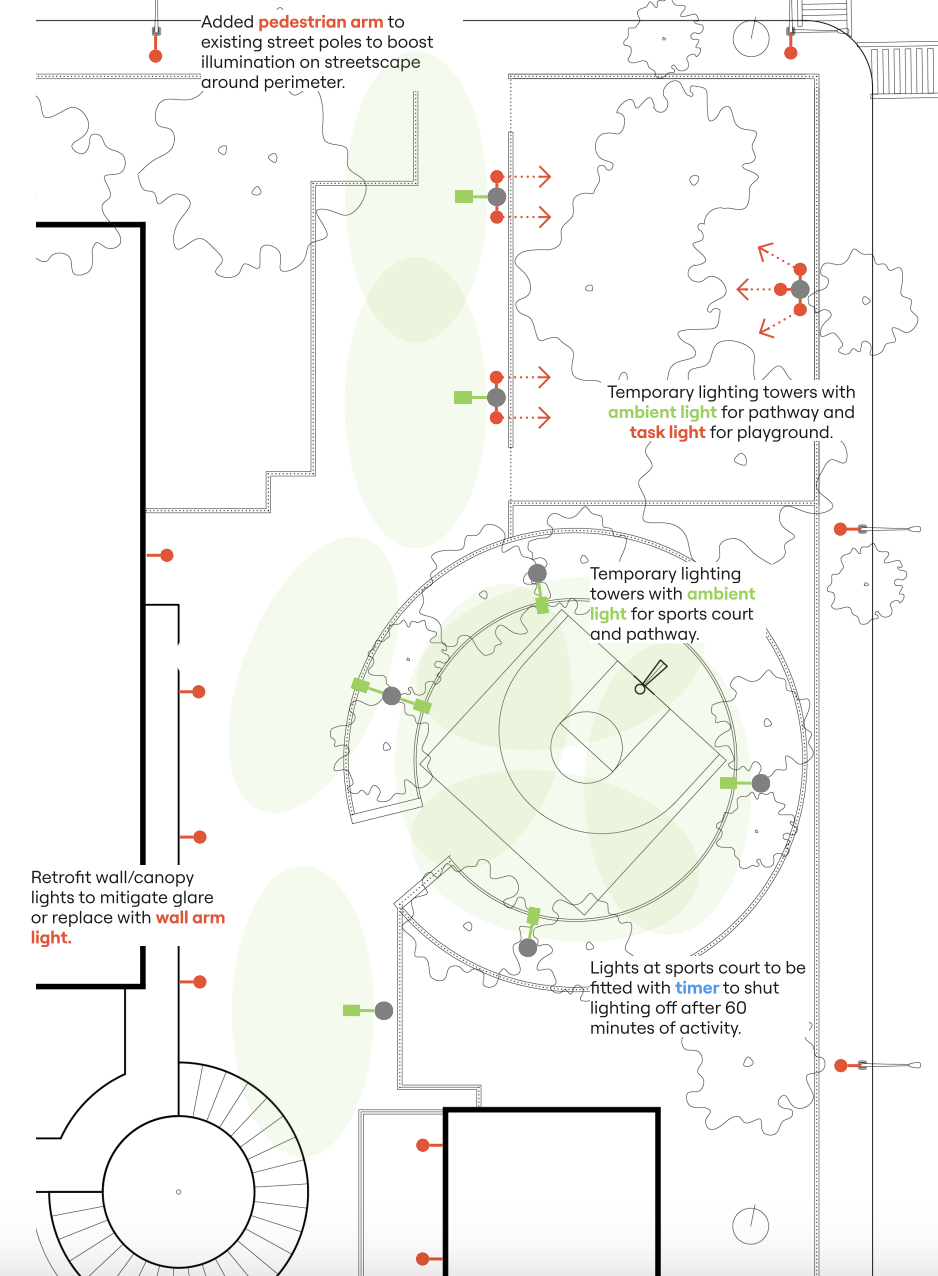
Playground and basketball court at NYCHA Seth Low Senior Center, Brownsville, Brooklyn
This site at the corner of a NYCHA housing development has little to no existing lighting infrastructure. A variety of mobile lighting units serve pedestrians, the play structure and the basketball court. Existing canopy lights can be retrofitted with wall-mounted fixtures or replaced entirely with wall arm lights to mitigate glare. Temporary lighting towers with ambient light serve pathways, while task light serves the sports court, fitted with a timer to shut off after 60 minutes of inactivity.
What policymakers should do
Adopt a "better light, not brighter light" policy
Focus on glare-free, evenly distributed, pedestrian-scale lighting rather than floodlights or over-illuminated spaces.
Prioritize lighting where people need it most
Direct efforts toward parks, sidewalks, plazas and other spaces where lighting makes the biggest difference in public safety.
Deploy adaptable strategies in high-need areas
Use newly proposed temporary mobile lighting for immediate impact and convert successful applications into permanent installations over time.
Leverage smart technology
Adopt motion sensors and dimmable LED fixtures to enhance safety while lowering costs and reducing light pollution.
Prioritize equity
Deploy warm, uniform, pedestrian-focused lighting to promote active use of public space in all neighborhoods.
Project team
Buro Happold
John Sloane, Maya Hladisova, Gabe Guilliams
Studio Gang
Abraham Bendheim, Wes Walker, Gia Biagi
Urban Design Forum
Daniel McPhee, Katherine Sacco
Community partners
Pitkin Ave BID
Tiera Mack
Youth Ministries for Peace and Justice
Reece Brosco
Chhaya CDC
Jessica Balgobin